The Night Gotham Came to Angola
The bush in southern Angola does not care what year it is. Thorn trees, red dust, goats with the facial expressions of tax auditors. The land out here is old, patient, and completely uninterested in cinema. Into this landscape, every evening at sunset, I unfolded a table.
On it: a laptop, two card readers, a row of small black hard drives. As far as I know, it was the only edit suite within a hundred kilometers. No roof, no door, no address. I called it the bush edit suite. The village probably called it the glowing thing the guests worship after dark. One night, this table would show a city none of us had ever seen, and the evening would end earlier than anyone wanted.
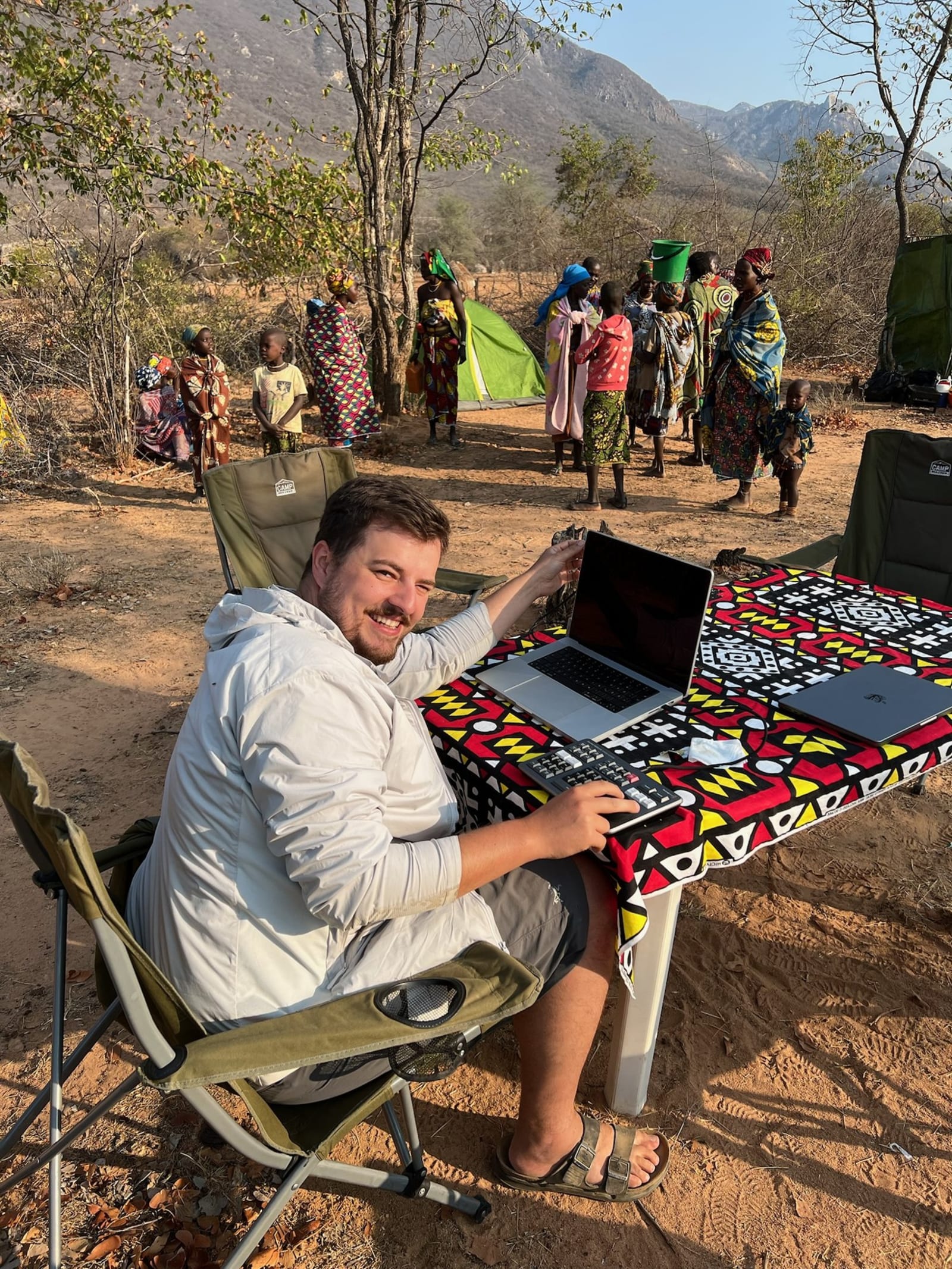
We were in Angola for The Last Places, the documentary Markus and I shot in five countries: South Sudan, Angola, Cameroon, Nigeria and Chad. Out there, there is no cloud, no server, no one to call. Months of footage existed only on the drives in my bag. People ask what I feared most on that shoot. Snakes? Checkpoints? Malaria? No. The soft click of a hard drive that does not wake up again. Footage that exists once does not exist. So: every file, every evening, twice.
The cards came out of the cameras still warm: the SSDs from my Ronin 4D, the drone cards, Markus's photo cards. Everything went onto two SanDisk drives at the same time, using a small software called Hedge that copies to two targets at full speed. (Hedge and I have since parted ways. Updates locked the version I had paid for. A rant for another campfire.) Then there was nothing to do but watch two green bars crawl toward one hundred percent while the bush went dark.
The full story is for members. Read it on Patreon and help make the next film possible.
Continue on Patreon